




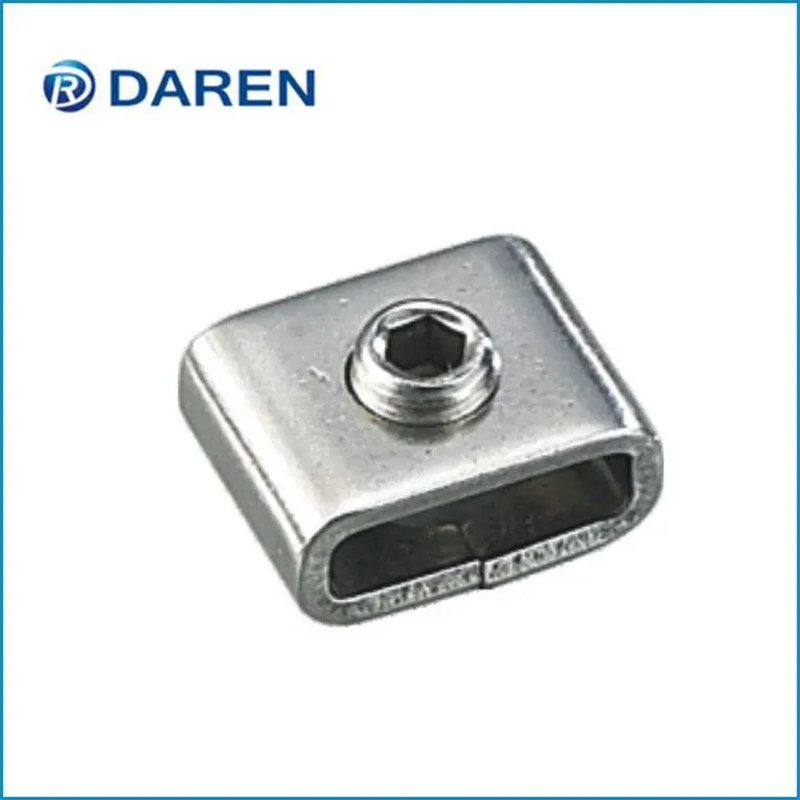
The Screw Type Buckles-Ls Series is a range of adjustable fasteners that use a threaded screw mechanism to draw two surfaces together and hold them under tension. Unlike spring latches or cam locks that rely on lever throw, these buckles tighten progressively, letting the operator dial in the clamping force needed to seal a door, hatch, or access panel. They show up where vibration would loosen a snap latch and where a fixed-length catch cannot compensate for a gasket that compresses over time.
What the Threaded Design Does Differently
Most quick-release fasteners trade adjustability for speed. A spring latch closes fast but gives whatever tension the spring offers. A cam lock pulls to a fixed stop. The Screw Type Buckles-Ls Series takes the opposite path: a threaded screw lets the operator turn until tension feels right, adjusting clamping pressure in fine increments. That matters when a seal needs enough compression to keep water out without permanently crushing the gasket.
The mechanism is simple and durable. A screw threads through a housing on one panel. A loop, bail, or catch on the opposite side accepts the screw tip or pivoting link. Turning draws both panels together. No springs to fatigue, no pivots to wear oval, no linkages to seize with dirt. For panels opened only during maintenance or relocation, this simplicity delivers years of trouble-free use.
Where These Buckles Solve Everyday Fastening Problems
The Screw Type Buckles-Ls Series fits into enclosures and structures where a panel needs to stay tight under conditions that punish lighter hardware. Common applications include:
- Electrical distribution cabinets: Outdoor feeder pillar doors and transformer compartment hatches bolt shut with threaded tension rather than a keyed quarter-turn latch. The screw adjustment compensates for gasket compression set over years of thermal cycling, so the IP rating of the enclosure does not degrade as the rubber ages.
- Railway equipment panels: Interior and exterior access covers on rolling stock see constant vibration and pressure pulses from tunnel transit. A threaded buckle lock stays put when a spring latch might rattle open or a cam latch might back off. Maintenance crews appreciate that the operating torque tells them the panel is fully seated.
- Industrial machinery guards: Safety covers over rotating shafts, belt drives, and process chambers need secure fastening that tool-free quarter-turn clamps cannot always guarantee. A screw-type buckle provides positive mechanical closure that a stray vibration or an impact from debris will not dislodge.
- HVAC and air handling access doors: Large sheet metal doors on duct plenums and filter housings warp slightly from air pressure and temperature changes. Threaded buckles positioned around the door perimeter pull the panel flat against the gasket frame, stopping the air leaks that waste energy and whistle in conditioned spaces.
- Marine deck hatches and equipment enclosures: Salt spray, constant motion, and the need for a watertight seal push fastener selection toward something adjustably tight and corrosion-resistant. The Screw Type Buckles-Ls Series, in stainless steel or suitably plated finishes, provides the progressive tension and environmental resistance that deck hardware requires.
The common thread is adjustable clamping force that holds. When a panel seal fails, it’s rarely the gasket that degraded it’s the latch points losing tension and letting a gap open. A threaded buckle lock fixes that directly: a partial turn restores tension without replacing the latch or shimming the mounting plate.
Selecting the Right Size and Material
Choosing a configuration from the Screw Type Buckles-Ls Series comes down to a few practical checks:
- Load rating and panel size: Larger panels or doors with heavy gaskets need buckles with larger screw diameters and higher clamping force. A small buckle overtightened to compensate for a load beyond its rating strips the threads or bows the panel edge around the mounting point.
- Material and finish: Zinc alloy bodies with a plated finish cover most indoor industrial applications at a reasonable cost. Stainless steel bodies and screws step up for outdoor enclosures, coastal installations, food washdown areas, and any place where rust on a fastener becomes a compliance or safety issue.
- Bail or link style: The connecting element between the screw and the frame-side catch can be a wire loop, a flat link plate, or a pivoting clevis. Wire loops offer more take-up range and flexibility on misaligned panels. Flat links provide a lower installed profile and a cleaner appearance on flush doors.
- Adjustable versus fixed catch plates: An adjustable catch plate lets the installer set the rough tension during mounting and leaves the screw for fine adjustment. A fixed catch shifts all the adjustment burden to the screw thread, which works fine for stable installations but leaves less margin for gasket relaxation.
- Tool operation or wing knob: Some variants use a hex or slotted screw head that requires a wrench or driver to operate. Others integrate a folding or fixed wing knob for tool-free access. The choice depends on how often the panel is opened and whether the enclosure sits in a publicly accessible area.
Installation Steps That Prevent Later Problems
Correct mounting of the Screw Type Buckles-Ls Series separates a panel that seals from one that leaks. Mount the buckle housing on the moving panel so the screw axis aligns straight with the catch point. Offset mounting side-loads the threads and bearing surface, causing wear and eventual binding.
Position the catch plate so the screw engages squarely without cross-threading. Too close forces an angled entry; too far bottoms out the thread before tension builds. The practical method: close the panel, set the catch loosely until the screw meets it square, mark the holes, and tighten. A trial closure with light tension confirms alignment before final tightening.
For gasketed panels, set initial tension to compress the gasket enough for the required seal without crushing it flat. After a few days, the gasket takes a set and the screw needs a partial turn to restore compression. An adjustable link makes this fine-tuning fast enough that crews will actually do it during scheduled rounds.
Routine Maintenance That Extends Hardware Life
Screw type buckles need little maintenance, but a few checks help. Light lubrication on threads prevents galling and corrosion especially on stainless steel where galling can seize the screw. Pivot points should move freely without slop; wear lets the screw pull off-axis and accelerates thread damage.
On outdoor enclosures, a quick visual check catches rust early. Spot-treat with corrosion inhibitor to keep the fastener serviceable. If plating wears thin, swap to a stainless equivalent during planned downtime to eliminate the recurring task.
An Adjustable Fastener for Panels That Must Stay Closed
The Screw Type Buckles-Ls Series bridges quick latches and permanent bolts adjustable tension, tool-free on knob variants, and screw-thread reliability where springs and pivots wear out. For panels needing a tight, consistent seal and occasional access, it fastens without adding maintenance. A spring latch fails open without warning. A threaded buckle loosens gradually, signals the issue, and tightens back with a partial turn staying common where a failed latch matters.
Post time: May-07-2026