




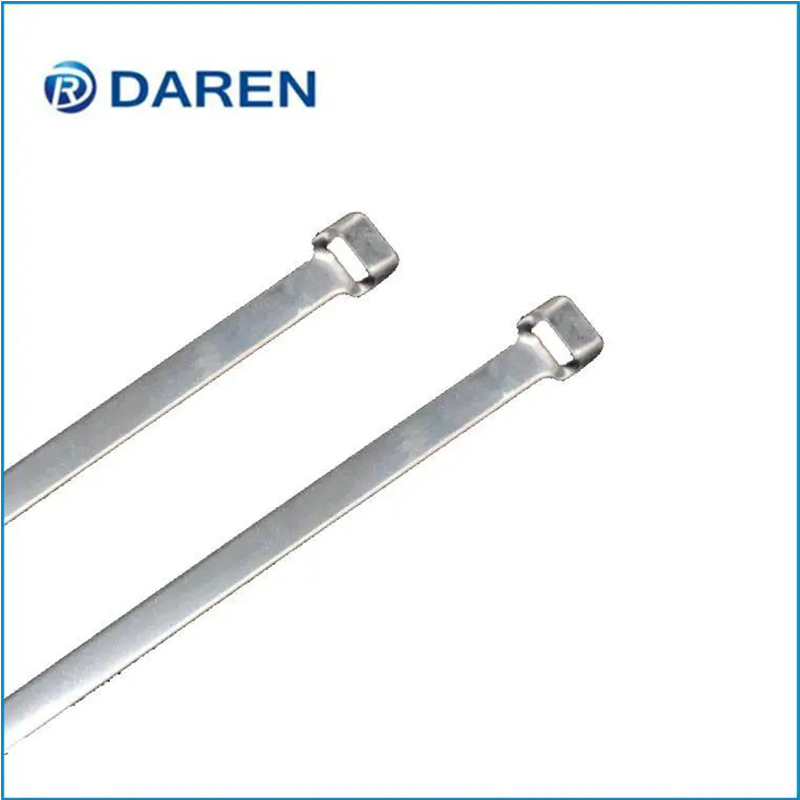
Stainless steel cable ties were created to be strong and durable. Depending on the size and grade of the tie, you can expect to get a tensile strength of 100 pounds to over 400 pounds. For example, a heavy-duty 12mm tie could be rated for much more than a standard 4.6mm cable tie will be capable of supporting.
Stainless steel cable ties have their strength determined by:
●The grade of the stainless steel used (typically 304 or 316).
●The thickness and width of the cable tie.
●The type of locking mechanism (e.g., ladder-style, ball-lock).
This strength makes them ideal for applications that demand a lot of strength and durability, such as securing pipes in industrial plants, bundling heavy conductivity cables in shipping vessels, and ensuring the stability of structures being used outside.
Why Use Stainless Steel Cable Ties?
The tremendous strength of stainless steel cable ties is just one of the reasons they are used all over the world. There are many more advantages to using stainless steel ties. Some of these include:
1. Resistant to Tough Conditions
Stainless steel cable ties are resistant to tough climate conditions (including extreme weather), UV light, associated chemicals, and corrosive materials (among others). This resistance makes them ideally suited for outdoor usage (especially outdoors) and for industries like construction, oil and gas, or marine engineering, where they are regularly utilized.
2. Exceeds Temperature Conditions
Stainless steel cable ties are able to operate efficiently where regular nylon or plastic ties are not able to perform at high-temperature conditions. Stainless steel cable ties can withstand extreme heat with temperatures from -80°C to 538°C (-112°F to 1,000°F) and are well-suited for use in locales such as those where you need to secure equipment, which can generate high heat.
3. Long-term Performance—Cost-Effective
Because of their ability to resist corrosion and continue to stay intact when exposed to outside forces, stainless steel cable ties typically provide longer-term performance than their plastic counterparts. Long-term performance means lower total cost of ownership when using stainless steel cable ties in areas where plastic would need to be replaced often.
Stainless steel cable ties are 100% recyclable. Using stainless steel cable ties will help any business reduce its carbon footprint.
Will Stainless Steel Cable Ties Rust?
Short Answer: Generally, no. Most stainless steel cable ties are made of high-grade stainless steel (304 or 316), which makes the cables highly resistant to rusting and corrosion. However, the level of corrosion resistance that cable ties exhibit is affected by the use environment:
304 Stainless Steel: This steel type is often used to create cable ties for outdoor applications. It exhibits very good corrosion resistance in everyday conditions, including settings with low salinity and acidity.
316 Stainless Steel: Known as marine-grade steel, 316 stainless steel can withstand a greater degree of corrosion and rust when exposed to areas of high salinity and/or highly acidic environments. These stainless steels are suitable for marine or industrial settings.
Which Is Stronger, 304 or 316?
Both types of stainless steel (304 and 316) exhibit very strong mechanical self-supportability; they differ based on their ability to resist corrosion in moist or liquid environments. Both 304 and 316 stainless steels have comparable tensile strength and yield strength.
If you are seeking cable ties that will be exposed to extreme conditions, such as in a chemical processing plant or any type of marine environment, then 316 is more reliable due to the presence of molybdenum. If you are seeking cable ties that will not be exposed to extreme conditions, such as outdoor use or in everyday environments, 304 stainless steel will meet your needs as well, and it is often more cost-effective than 316.
The Versatility of Stainless Steel Cable Ties
In addition to industrial applications, stainless steel cable ties have a wide variety of uses, including:
●Aircraft and aerospace systems for securing components during high-altitude operations.
●Food and pharmaceutical plants where sanitation and corrosion resistance are vital.
●Public infrastructure projects such as bridges, tunnels, and railroads, which demand long-term durability in harsh environments.
●Home use for securing large cables or organizing outdoor spaces exposed to extreme weather conditions.
Many specialty options, like Stainless Steel Cable Ties – L Type Ties, which offer unique locking systems or shapes tailored for specialized uses, ensuring versatility for diverse applications.
Conclusion
Are stainless steel cable ties strong? Yes! Stainless steel cable ties boast incredible tensile strength, corrosion resistance, and excellent versatility for numerous applications. Whether in industrial, commercial, or residential settings, stainless steel cable ties are a reliable and long-lasting choice.
When deciding on the right cable tie, consider the environmental conditions and load requirements for your project. For less demanding conditions, 304 stainless steel is a cost-effective and sufficient option. For extreme environments, such as those with high salinity or acidity, 316 stainless steel provides unmatched durability and resistance.
With the right selection, you’ll ensure that your cable ties remain dependable and withstand the toughest challenges over time.
Post time: Apr-14-2026