




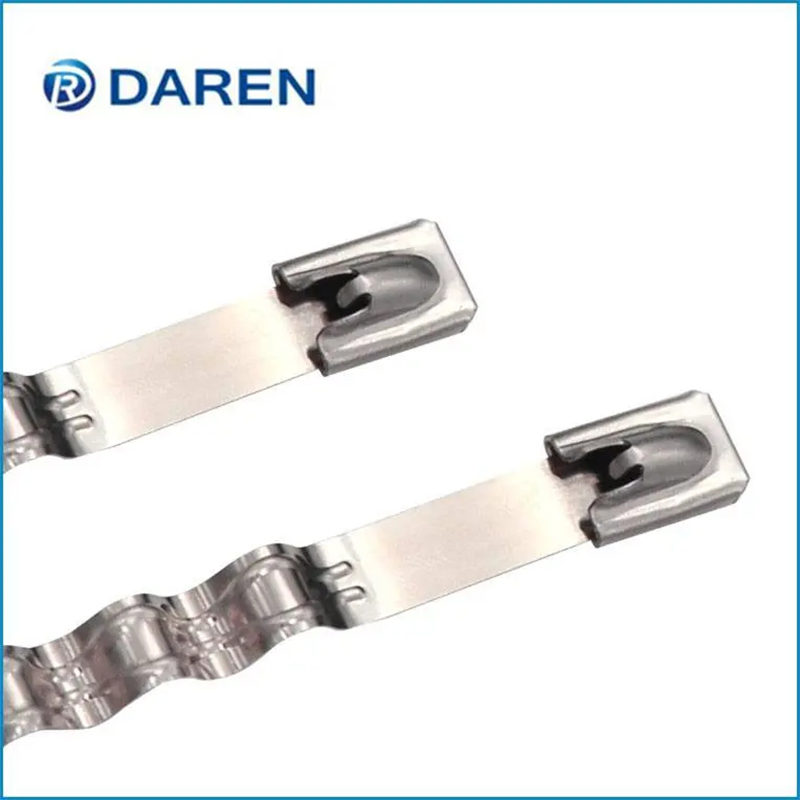
If you’ve had trouble with plastic ties breaking or coming loose, you’re not alone. Many people turn to the ball lock cable tie for a better solution. It’s a reusable stainless steel fastener for heavy-duty, high-heat, or outdoor use. Unlike nylon ties, a ball lock cable tie uses a small spring-loaded ball inside the head to hold the steel strap securely. Just insert the strap, push it through, and the ball locks it in place. To release, lift the ball manually. This simple design gives you strength and the ability to adjust or reopen the tie.
Why Choose a Ball Lock Cable Tie Over Other Options
The main reason professionals and DIY users switch to a ball lock cable tie is durability. These ties are typically made of marine-grade stainless steel (such as 304 or 316), which resists rust, UV rays, chemicals, and extreme temperatures ranging from -80°C to 500°C. Nylon ties become brittle in the cold or melt in high heat, but a steel tie with a ball lock mechanism stays reliable. Another key advantage is reusability. You can open, adjust, and close the same tie many times without losing holding power. This saves money and reduces waste, especially in testing, maintenance, or temporary installations.
Common and Practical Use Cases
Ball lock cable ties are not just for industrial sites. Here are several real-world scenarios where they solve actual problems:
●Marine and saltwater environments: Securing cables on boats, docks, or offshore equipment. Plastic ties degrade quickly in salt spray, but stainless steel with a ball lock head holds firm.
●HVAC and high-heat areas: Fastening insulation, wiring, or sensors near engines, exhaust pipes, or industrial ovens.
●Outdoor infrastructure: Attaching signs, cables, or fencing in direct sunlight for years without cracking.
●Electrical and grounding applications: Many electricians use ball lock ties as permanent wire management in substations or solar farms because they are conductive and fire-resistant.
●Automotive and racing: Securing hoses, brake lines, or wiring looms in engine bays where heat and vibration would destroy plastic ties.
How to Use Ball Lock Cable Ties Correctly
Using one is straightforward, but following these steps ensures maximum holding force:
1.Cut the steel strap to your desired length, leaving a little extra for adjustment.
2.Insert the strap through the head of the ball lock mechanism from the entry side.
3.Push the strap past the small steel ball inside. You will feel a light click or resistance as the ball engages.
4.Pull the strap tight around your bundle. The ball will automatically lock against the strap to prevent slipping.
5.To release, lift the spring-loaded ball using a small flathead screwdriver or your fingernail, then slide the strap back.
6.To relock, simply push the strap forward again.
For permanent installations, you can cut off the excess strap flush with the head using side cutters. For temporary setups, leave the tail long for future adjustments.
What Buyers Should Look For Before Purchasing
When shopping for a ball lock cable tie, pay attention to three things:
●Material grade: 304 stainless steel is good for most indoor and outdoor uses. 316 stainless steel is better for coastal or chemical-heavy environments.
●Strap width and thickness: Wider straps (4.6mm or 7.9mm) handle heavier loads. Thinner ones (2.5mm) are more flexible for tight spaces.
●Head design: Some heads are compact for narrow access, while others have a larger release lever for gloved hands.
●Also check the tensile strength listed by the manufacturer. A good quality 4.6mm wide ball lock tie typically holds 50–80 kg (110–175 lbs), while 7.9mm versions can exceed 120 kg (265 lbs).
Summarize
If you need a cable tie that outlasts the equipment it holds, the ball lock cable tie is a great choice. It works where plastic fails, saves money because you can reuse it, and gives you peace of mind in tough conditions. Whether you’re an engineer, electrician, boat owner, or weekend mechanic, using this tool makes fastening faster, safer, and more reliable.
Keep a few sizes in your toolbox. Once you start using ball lock ties, you’ll wonder why you ever relied on single-use plastic.
Post time: Apr-09-2026