




Most people start by hand-pulling cable ties and snipping the tails with side cutters. It works for a handful of connections, but once you’re bundling dozens or hundreds of ties in a shift, your fingers will tell you there’s a better way. That’s where cable tie fasten tools come in purpose-built devices that tension the tie to a set force and trim the excess flush in one motion. They take a repetitive manual task and turn it into something fast, consistent, and far less punishing on your hands.
The Basics of Cable Tie Fasten Tools
At their simplest, cable tie fasten tools grip the tail of a nylon cable tie, pull it tight to a preset tension, and cut off the remaining strap cleanly. There are manual versions that rely on a squeeze of the hand, and there are powered ones pneumatic or battery-operated that automate the pull-and-cut cycle. What they share is repeatability. Instead of guessing how tight is tight enough, you set the tool once and get the same holding force on every bundle.
This sounds like a small detail until you’ve dealt with ties that were pulled too loose and slipped off during transit, or ties that were cranked down so hard they bit into the wire insulation. Consistent tension matters for reliability, and cable tie fasten tools deliver that consistency far better than hand strength alone.
When Manual Pulling Isn’t Enough
There are a few scenarios where a dedicated tool stops being a luxury and starts looking like common sense. High-volume assembly lines are the obvious one if a team is installing thousands of cable ties per week, the time saved per tie adds up quickly. But less obvious cases include applications where the tie needs to sit at a precise tension, such as bundling thin-walled tubing or securing wiring inside tight enclosures where an over-tightened tie head can become a pressure point.
Field technicians working in cold or wet conditions also benefit. Nylon cable ties stiffen in low temperatures, making hand-pulling genuinely difficult after a few hours outdoors. A cable tie fasten tool handles the resistance mechanically, so the weather doesn’t dictate how clean the job turns out.
Choosing the Right Tool for Your Task
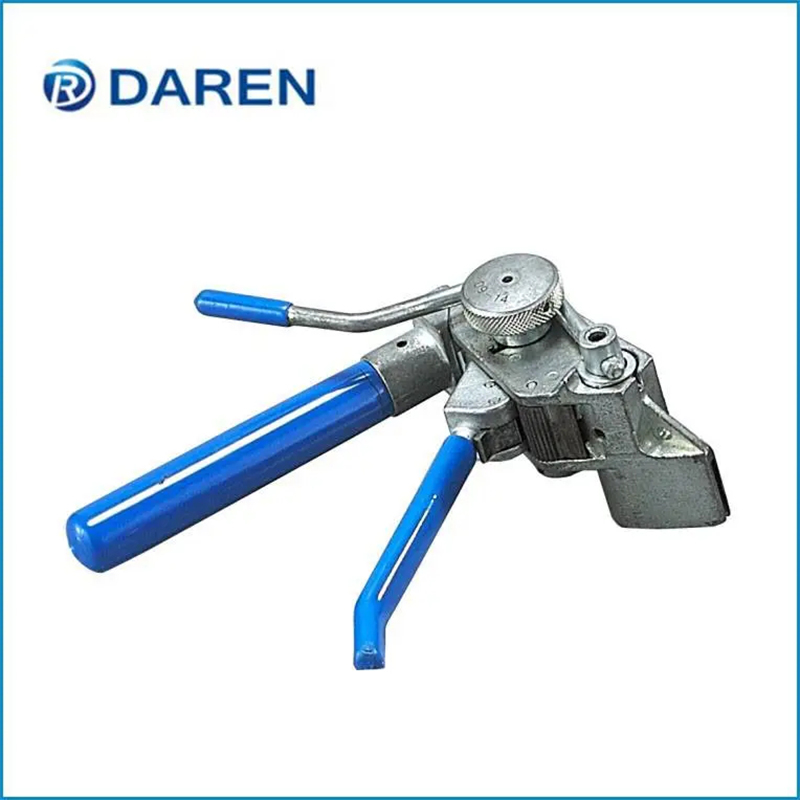
The first split is between manual and powered. Manual cable tie fasten tools are lighter, less expensive, and perfectly adequate for maintenance crews or small-batch production. They usually feature an adjustable tension knob and a trigger-style grip that feels natural after a few minutes of use.
Powered options pneumatic or cordless make more sense for sustained high-volume work. They cycle faster and reduce the repetitive strain that comes from squeezing a manual tool hundreds of times a day. The trade-off is weight and cost, and you’ll need to factor in air supply lines for pneumatic models or battery management for cordless ones.
Pay attention to the tie width and thickness compatibility. Most cable tie fasten tools cover a range, but cross-checking your most common tie sizes against the tool’s spec sheet avoids the frustration of discovering a mismatch on the job.
Where These Tools Prove Their Worth
Electrical panel builders use cable tie fasten tools to keep wiring harnesses neat and properly tensioned without nicking the conductor insulation. Automotive harness manufacturers depend on them for repeatable bundling that survives vibration and temperature cycling. In data centers, where cable management affects both airflow and maintenance access, a properly set tension tool helps keep dense cable runs organized without crushing the cables.
Even in packaging and logistics, where ties secure bundled goods or tamper-evident seals, the flush cut produced by a good fasten tool leaves no sharp tail to scratch hands or snag on adjacent items.
Practical Takeaways
- Cable tie fasten tools combine tensioning and flush cutting into one step
- Preset tension settings give you uniform results tie after tie
- Manual tools suit maintenance and light production; powered tools handle high volumes
- Consistent tension protects wires, tubing, and bundled goods from damage
- A clean flush cut eliminates sharp tails and improves safety
If cable ties are a regular part of your work, the question isn’t really whether a tool helps—it’s how much time and inconsistency you’re willing to tolerate without one. The right cable tie fasten tool turns a small daily annoyance into a quick, repeatable action, and that shift adds up across a week, a month, or a full project schedule.
Post time: Apr-28-2026