




Stainless steel cable ties hold cables, hoses, and components where plastic fasteners melt, snap, or degrade. Made from corrosion-resistant steel, they handle heat, saltwater, UV exposure, and chemicals without losing strength. Common uses include marine engine compartments, hot rooftops, and industrial machinery areas. Unlike nylon ties that turn brittle and fail after one season outdoors, these ties keep their grip for years. Most buyers make the switch after the first expensive callback caused by a failed plastic fastener.
Material Grades and What They Mean in Practice
Grade selection determines where stainless steel cable ties succeed or fail. Grade 304 handles general outdoor and indoor use away from constant salt exposure. Grade 316 contains molybdenum, giving it far better resistance to chlorides, salt spray, and de-icing chemicals making it the right call for marine, coastal, and chemical processing environments. The modest price gap between grades shrinks further when weighed against early replacement labor.
Temperature extremes rule out plastic entirely. Near steam lines, exhaust systems, ovens, or under desert sun, these ties hold full strength without softening. Freezing conditions cause nylon to fracture, while stainless remains tough. Fire codes in tunnels, transit stations, and building shafts often require fasteners that won’t fuel flames or smoke a requirement stainless meets without special design.
Real Applications Where the Choice Becomes Obvious
Electrical and solar contractors working on flat commercial roofs frequently encounter conditions that destroy plastic ties within months. Wind-driven vibration, pooled water, temperature swings from freezing nights to blistering afternoons—none of these affect stainless steel cable ties. A bundle secured on a rooftop today will remain secured through years of weather without a return visit to replace degraded fasteners.
Marine environments represent perhaps the harshest test. Salt-laden air, occasional submersion, engine room heat, and constant motion combine to defeat ordinary fasteners quickly. Boatyards and ship maintenance crews use stainless steel cable ties to secure wiring harnesses, hydraulic hoses, rigging cables, and even temporary protective covers. A failed tie aboard a vessel often means a chafed hose or a shorted circuit, so reliability carries immediate safety weight.
Food processing and pharmaceutical facilities face different but equally demanding conditions. Hot water washdowns, aggressive cleaning chemicals, and strict hygiene standards rule out porous, moisture-absorbing plastics. The smooth, non-porous surface of stainless resists bacterial adhesion and withstands repeated sanitation without degradation. Coated stainless steel cable ties offer additional protection where metal edges could damage sensitive cables or tubing, all while preserving the underlying durability.
Oil and gas sites, telecommunications towers, wind turbines, and remote solar arrays share a common need: components that function without routine inspection. When maintenance visits involve travel time, safety permits, and equipment shutdowns, the premium paid for stainless fasteners evaporates compared to the cost of a single unnecessary service call.
Locking Styles and Installation Practicalities
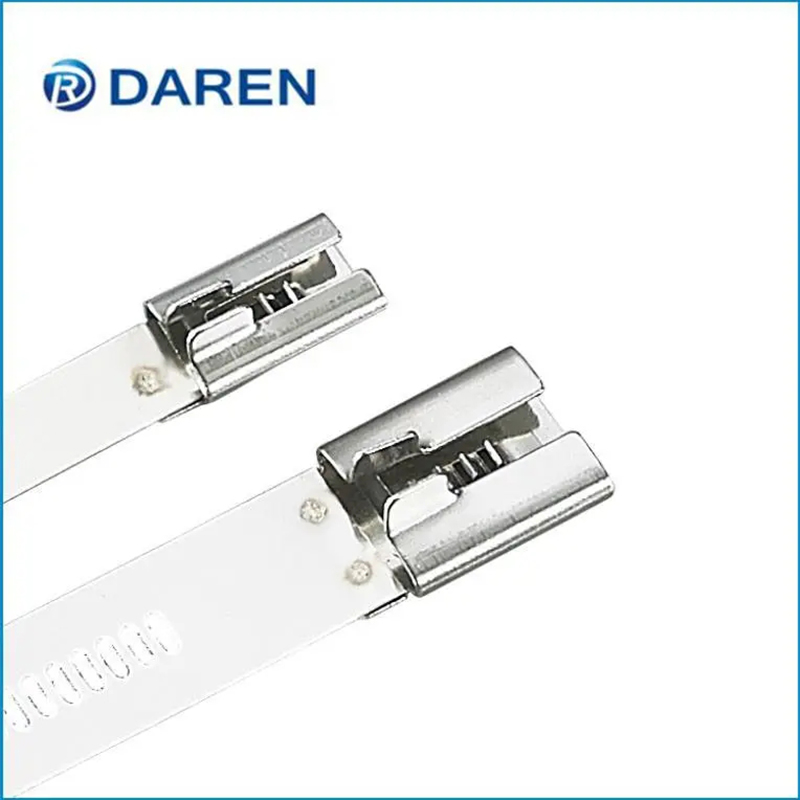
Most stainless steel cable ties rely on either a ball-lock or self-locking mechanism. Ball-lock designs use a small stainless sphere inside the head that rolls forward as the strap tightens, wedging it permanently. Simple, robust, and field-proven. Self-locking versions shape the head so the strap teeth engage directly without a separate component, producing a slightly lower profile. Both lock securely when tensioned within recommended ranges.
Tension tools matter more than newcomers expect. While pliers can pull a stainless steel cable tie tight and side cutters can trim the tail, proper tensioning tools produce consistent clamping force and flush-cut the excess strap in one motion. For installers working overhead, on ladders, or inside confined enclosures, that single-motion efficiency matters. Over-tensioning with improvised tools carries the risk of crushing cable insulation or stressing the strap itself, so sticking to published tension settings protects both the bundle and the fastener.
The cut end of a stainless tie deserves attention. Metal edges are inherently sharper than snipped plastic, and a protruding tail can cut hands or abrade adjacent cables. Flush-cutting tools resolve this. Where the installation will see regular human contact, coated ties or careful tail management become necessary details rather than afterthoughts.
Size, Strength, and Matching Specifications to Loads
Width determines tensile strength in stainless steel cable ties. Narrow ties around 4.6mm suit light-duty bundling; wider bands of 7.9mm or 12mm secure heavy cable trays, rigid conduits, and large pipe diameters. Every supplier listing should show a minimum loop tensile strength figure. Comparing this number against the actual static weight, potential dynamic load, and any vibration the bundle will experience ensures the fastener is not the weakest point in the assembly.
Length dictates the maximum bundle a tie can wrap around. A common misstep involves measuring diameter rather than circumference, ending up with ties a few millimeters too short. Adding a margin for the tool grip and locking pass avoids frustration. Keeping a small selection of sizes on site provides flexibility without excess inventory.
What Signals a Reliable Supplier
Product listings that specify the stainless grade 304 or 316 signal transparency. Vague terms like “stainless steel” without grade identification make it impossible to assess corrosion resistance. Tensile strength figures belong in a proper specification sheet; their absence suggests either missing information or a supplier unwilling to stand behind performance claims.
If an installation falls under fire codes, marine classification requirements, or electrical safety standards, asking for relevant certifications or test data upfront separates suppliers who understand regulated environments from those who only sell commodity fasteners. Packaging format also affects on-site productivity. Crews working from trucks or lifts benefit from pre-sorted, resealable quantities. Shop-floor operations running through high volumes may prefer larger bulk containers.
The Shift From Frequent Replacement to Long-Term Reliability
The move from plastic to stainless steel cable ties almost always starts with a failure. A cable sagged onto a hot surface and shorted. A conduit dropped. A hydraulic hose wore through because its tie snapped. Stainless removes that failure entirely.
For sites exposed to weather, heat, or salt year-round or where maintenance access is difficult and expensive these ties become the baseline specification, not a premium upgrade. The unit cost looks higher on paper, but total ownership cost over years of reliable service rarely favors plastic in harsh conditions. Buyers who focus on long-term cost rather than piece price reach the same conclusion.
Post time: Apr-30-2026