




Stainless steel zip ties can last 10 to 30 years outdoors in many applications, and sometimes even longer when the correct grade is used. Their lifespan depends on the stainless steel material, exposure to salt, chemicals, moisture, temperature changes, vibration, and installation quality. Compared with nylon zip ties, stainless steel ties are far more reliable for long-term outdoor fastening because they do not become brittle from UV sunlight.
For buyers, contractors, and maintenance teams, the key is not only knowing how long they last, but also choosing the right type for the environment. A cable tie used on a rooftop solar system faces different conditions from one used on a ship, coastal tower, chemical plant, or outdoor electrical cabinet. This guide explains what affects service life and how to choose the right Stainless Steel Cable Ties for outdoor use.
Typical Outdoor Lifespan of Stainless Steel Zip Ties
In normal outdoor environments, quality stainless steel zip ties often last 10 to 30 years. In mild inland areas, 304 stainless steel ties can provide long service life. In harsher areas, such as coastal, marine, wastewater, or industrial locations, 316 stainless steel is usually recommended because it offers better resistance to salt and chemical corrosion.
Unlike plastic zip ties, stainless steel ties are not weakened by UV exposure. The main factors that shorten their life are corrosion, mechanical wear, vibration, incorrect material selection, and poor installation. When selected and installed properly, they are one of the most durable fastening solutions for outdoor projects.
Why Stainless Steel Cable Ties Last Longer Than Nylon Zip Ties
Standard nylon zip ties are convenient and low-cost, but outdoor weather gradually reduces their strength. Sunlight, heat, freezing temperatures, and moisture can cause nylon to crack or become brittle. UV-resistant nylon performs better, but it still has a shorter service life than stainless steel.
Stainless steel zip ties can handle severe weather, temperature extremes, fire risk, vibration, and heavy loads. This makes them suitable for solar farms, telecom towers, shipyards, railways, tunnels, oil and gas sites, HVAC systems, and outdoor electrical installations.
Key Factors That Affect Outdoor Lifespan
Stainless Steel Grade
304 stainless steel cable ties are suitable for many general outdoor applications, including construction, fencing, signs, electrical work, and equipment fastening. They provide good corrosion resistance at a cost-effective price.
316 stainless steel cable ties are better for marine, coastal, offshore, and chemical environments. If the installation is exposed to salt spray, seawater, industrial fumes, or harsh chemicals, 316 stainless steel usually provides a longer and safer service life.
Environmental Exposure
Salt, chemicals, and pollution are the biggest challenges for outdoor metal products. In coastal areas, salt particles can settle on the surface and increase the risk of pitting corrosion. In industrial environments, acids, alkalis, fumes, and chemical vapors may also accelerate corrosion. For these applications, 316 stainless steel or coated stainless steel cable ties are often the better choice.
Temperature and Vibration
Stainless steel ties perform well in both hot and cold conditions. They are commonly used where plastic ties may soften, melt, or crack. However, vibration and movement can cause wear if the tie is too loose or installed on a sharp surface. For demanding fastening jobs, heavy duty stainless steel cable ties provide stronger holding power and better mechanical performance.
Installation Quality
Even a high-quality tie can fail early if installed incorrectly. Over-tightening may damage the cable jacket, while under-tightening can allow movement and abrasion. A stainless steel cable ties tool helps apply consistent tension and creates a clean cut, which improves safety and long-term reliability.
Do Stainless Steel Zip Ties Rust?
Stainless steel is highly corrosion resistant, but it is not completely rust-proof in every environment. It protects itself through a thin chromium oxide layer on the surface. If this layer is damaged, contaminated, or exposed to aggressive salt or chemicals for a long time, corrosion can occur.
For most outdoor applications, stainless steel zip ties resist rust very well. If rust stains appear, possible causes include poor material quality, contact with carbon steel, surface contamination, or using 304 stainless steel in an environment that requires 316 stainless steel.
Best Outdoor Applications
Stainless Steel Cable Ties are widely used where strength, weather resistance, and long service life are important. Common applications include solar panel cable management, outdoor electrical wiring, telecom tower cables, marine equipment, traffic signs, HVAC systems, railway projects, industrial hoses, security fencing, and oil and gas facilities.
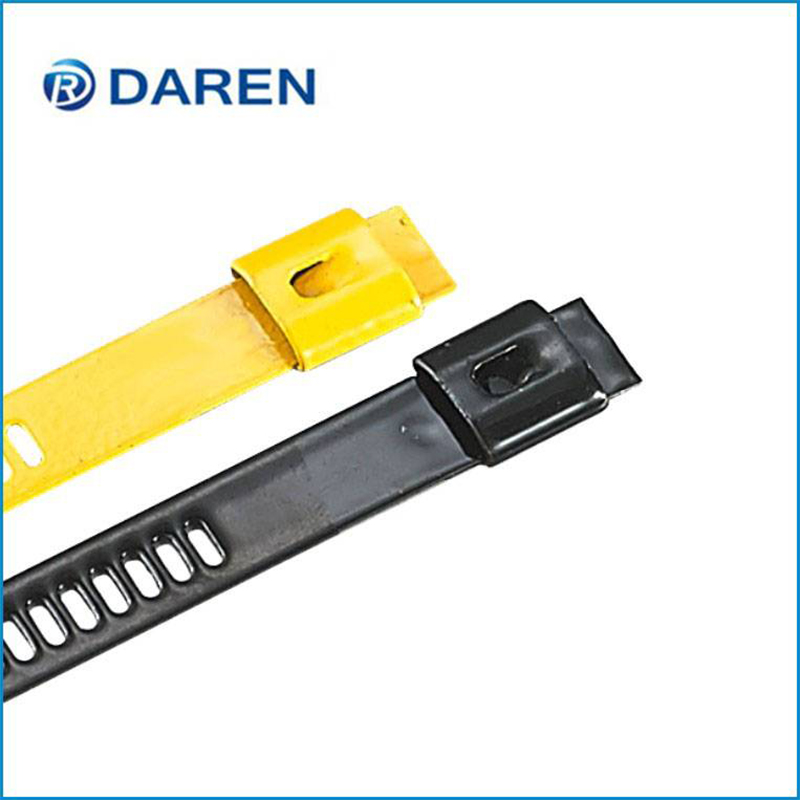
For electrical and telecom cables, coated stainless steel cable ties can help protect cable insulation from abrasion. For large bundles, pipes, or equipment fastening, heavy duty stainless steel cable ties are usually preferred.
How to Choose the Right Stainless Steel Zip Tie
Start by considering the environment. For general outdoor use, 304 stainless steel may be enough. For coastal, marine, chemical, or highly corrosive environments, choose 316 stainless steel. If the tie will contact cable insulation directly, coated stainless steel cable ties can provide added protection.
Next, consider tensile strength and bundle size. Light wiring does not require the same tie as heavy pipes, hoses, or industrial equipment. For professional installation, using the correct stainless steel cable ties tool helps improve consistency, appearance, and safety.
FAQ: Stainless Steel Zip Ties Outdoors
How long do stainless steel zip ties last?
They usually last 10 to 30 years outdoors, depending on the stainless steel grade and environment. 316 stainless steel generally lasts longer than 304 stainless steel in saltwater or chemical conditions.
Will zip ties last outside?
Yes, but the material matters. Nylon zip ties may degrade from UV exposure and weather, while stainless steel zip ties are designed for long-term outdoor performance.
Do stainless steel zip ties rust?
They resist rust very well, but they can corrode in extreme environments if the wrong grade is used. For marine and chemical exposure, 316 stainless steel is recommended.
Are coated stainless steel cable ties better?
Coated ties are better when cable protection, abrasion resistance, or insulation protection is needed. They are commonly used for electrical, telecom, and vibration-prone applications.
Do I need a special tool?
A stainless steel cable ties tool is recommended for professional work. It helps tighten the tie correctly and cut it cleanly, reducing sharp edges and installation errors.
Stainless steel zip ties are a long-lasting outdoor fastening solution, typically offering 10 to 30 years of service when properly selected and installed. For general outdoor projects, 304 stainless steel is often suitable; for marine, coastal, chemical, or heavy-duty use, 316 stainless steel, coated options, or heavy duty stainless steel cable ties provide better reliability. If you need a fastening product that can resist UV, weather, heat, vibration, and corrosion, stainless steel zip ties are a stronger long-term choice than plastic alternatives.
Post time: May-28-2026