




In situations when plastic zip ties start to become weak, melt away, or get old, one can use Stainless Steel Ties instead. These ties are made for securing cables, wires, tubes, covering materials, etc. in places that can be affected by heat, water, chemicals, and vibrations.
These ties are used broadly among industrial machinery, solar panels, onboard watercraft, motor car applications, casing for electrical shells, and outdoor installations. The guide discusses their benefits, their different materials, uses, and how to install.
What Are Stainless Steel Cable Ties?
Stainless steel cable ties are metallic fastening strips equipped with a locking device that secures cables and other components firmly. They have higher resistance to heat, mechanical strain, weather, and aging than regular nylon ties.
The most frequent types of materials are 304 and 316 stainless steel. 304 is appropriate for general applications both indoors and outdoors, while due to the presence of higher levels of nickel and molybdenum in 316 stainless steel, this alloy has improved resistance towards salt, chlorides, as well as marine situations.
Key Benefits
Heavy-Duty Strength
Stainless steel ties are known for their capability of withstanding heavy weight loads retails and use in applications where stress and movement are part of the scene. Be sure to check with the manufacturer to ensure the tensile stress rating associated with the particular stainless steel linear bond you have chosen.
Corrosion Resistance
Stainless steel has the ability to withstand corrosion and rust. Stainless steel grade 304 is perfectly suitable for use in standard conditions, while grade 316 stainless steel cable ties replace grade 304 products in coastal areas, where seawater, salt, pool, or chemicals are typically present.
Resistance to Heat and Weather
In contrast to several plastic ties, stainless steel ties are capable of retaining their strength throughout a wide range of temperatures. They can be used in engine compartments, manufacturing machinery, outdoor devices, and other areas exposed to heat and cold, be it sunshine or climate change.
Reliable Performance Under Vibration
Persistent vibration can result in the loosening of fasteners that are not sufficiently strong enough for use in machines, generators, industrial equipment, and electrical systems. The use of tie made of stainless steel in the right way allows organizing cables as well as preventing their contact with hot surfaces and sharp edges.
Coated and Black Stainless Steel Cable Ties
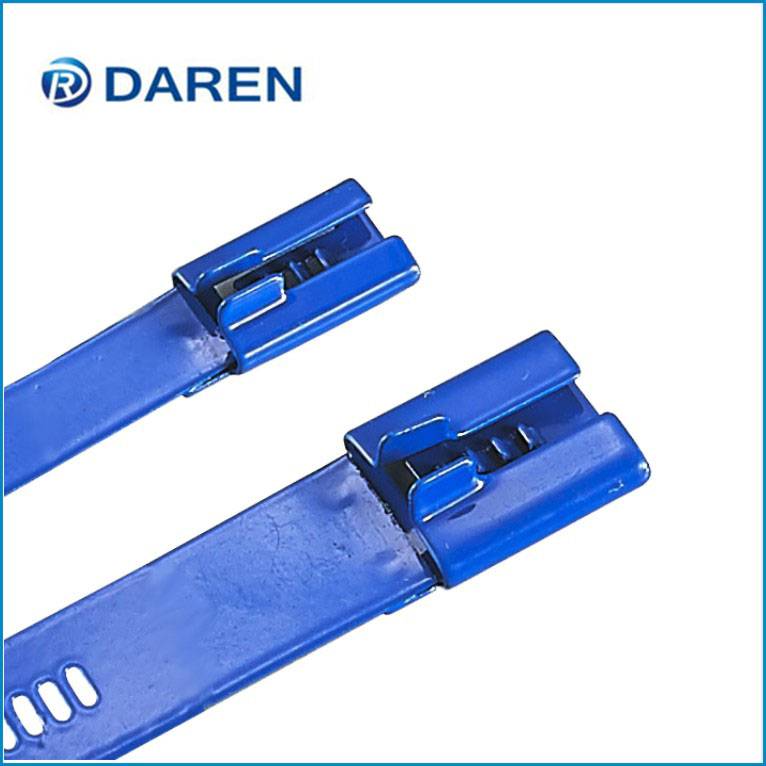
Stainless steel coated cable ties have a protective covering or coating applied to their metal part, for example, nylon or PVC. The protective covering can lower wear and tear, offer protection to the insulation of cables, facilitate the handling of the cable ties, and also provide electrical isolation.
Black stainless steel cable ties are commonly used in solar panels, outdoor lighting, cars, telecommunications, and architecture. Ensure that the coating is UV stabilized and appropriate for the expected chemicals and temperatures before outdoor use.
Common Applications
- Solar panels and renewable energy systems
- Marine vessels and coastal infrastructure
- Automotive, truck, and rail systems
- Industrial machinery and factory equipment
- Electrical cabinets and control panels
- Telecommunications and network installations
- Outdoor lighting and security systems
- HVAC, chemical, and food-processing equipment
How to Choose the Right Product
To begin with, select the appropriate grade of stainless steel. Grade 304 should be used for typical applications, while grade 316 is more suitable for marine and very salty environments. Following that, you should find out the diameter of the cable bundle and choose a tie with sufficient usable length.
When it comes to tie specifications, compare tie width, thickness, tensile strength, locking design, and working temperature. If insulation could be damaged, go for the insulated tie option. For professional applications, ensure you pick a good tensioning tool when cutting the ties.
Installation Tips
Plan and arrange the cables before securing with a tie and take care to avoid sharp turns or excessive stress. Make sure the tie is tight enough to keep the cables together, but be careful not to crush or injure the casing of the cables.
Since there is the possibility that the metal edge is sharp, remove the surplus strap with an appropriate method. The use of protective covers or coated ties is essential in areas where people are likely to contact the installation. Additional supports should be placed if the cables suffer from heavy loads, adverse conditions, or sharp surfaces.
Frequently Asked Questions
Do stainless steel cable ties rust?
They are extremely resistant to rust, however, unsuitable materials, salt deposits, and retained water can damage the exterior of the object. Getting the right grade is a good way to prolong the service life.
Why are they suitable for harsh environments?
Their high level of strength comes along with high resistance to heat, ultraviolet rays, moisture, vibrations, and many chemicals. Because of this property, they are capable of functioning well in places where plastic ties may break or lose their rigidity.
Can they withstand extreme conditions?
There are various stainless steel ties that can withstand harsh outdoor and industrial settings. It is good practice always to check the product specifications including temperature, tensile strength, coating, and chemical resistance properties.
Is 316 better than 304 stainless steel?
316 offers enhanced resistance to chlorides and salt, allowing it to be used in marine and coastal locations. However, when it comes to conventional indoor and outdoor applications, 304 performs adequately and is more budget-friendly.
In conclusion, Stainless Steel Cable Ties are the ideal option whenever strength, resistance to corrosion, and durability are necessary requirements for the installation. Choosing the appropriate grade, size, coating, and installation method guarantees effective operation in difficult conditions.
Post time: Aug-26-2026