




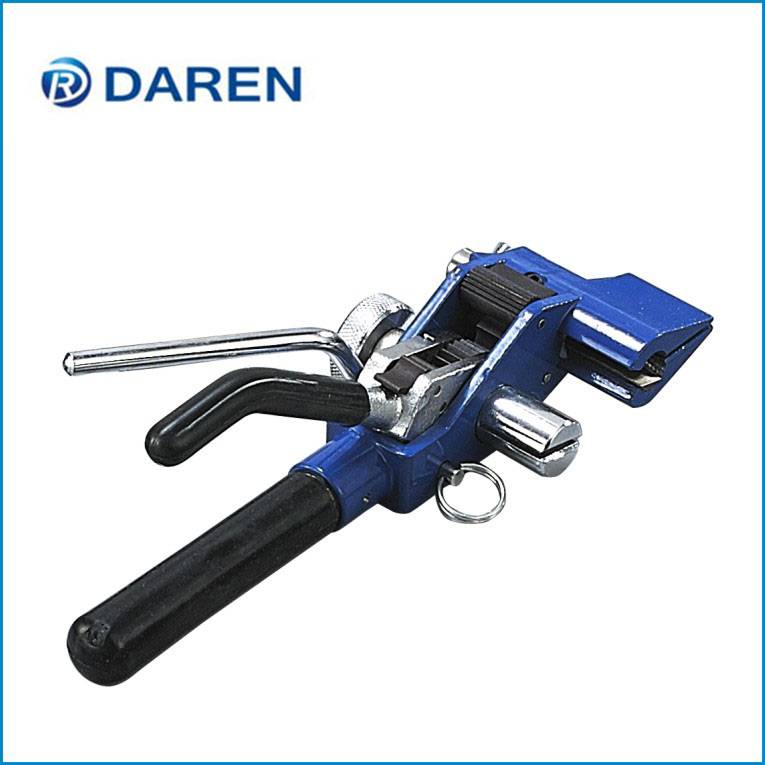
A stainless steel machine for tie installation is a practical tool that tensions and cuts stainless steel cable ties in one operation. It is widely used in electrical work, telecommunications, construction, marine projects, industrial maintenance, and other applications where corrosion-resistant, high-strength fastening is required.
By combining tensioning and cutting, this tool helps installers work faster, achieve more consistent results, and leave fewer sharp tie ends. A dependable stainless steel machine product is especially valuable for projects requiring secure, long-lasting cable, pipe, sign, or equipment fastening.
What Is a Stainless Steel Tie Tensioning and Cutting Tool?
This hand-operated tool is designed to tighten stainless steel ties around an object and cut away the excess tail after the correct tension is reached. The operator wraps the tie around a cable bundle, pipe, bracket, or other component, feeds the tail through the locking head, and inserts the remaining tail into the tool.
With an adjustable tension setting, the user can apply suitable force for different installation needs. Once tightened, the built-in cutting mechanism creates a cleaner, more professional finish without requiring a separate cutter.
Technical Specifications
| Applicable tie thickness | 0.2 mm–0.8 mm |
| Applicable tie width | 3 mm–25 mm |
| Compatible tie styles | Button-head ties, L-type ties, miniature uncoated ties, and similar styles |
| Key functions | Adjustable tensioning and excess-tail cutting |
| Additional feature | Spare parts supplied for maintenance needs |
Common Types of Stainless Steel Machines
Manual tension-and-cut tools are ideal for routine field work because they are portable, simple to operate, and require minimal maintenance. Heavy-duty manual models are generally used for wider or thicker ties on pipes, poles, ducts, and industrial equipment.
For large-volume installations, pneumatic or battery-powered stainless steel machinery may improve productivity. However, manual tools remain a reliable and cost-effective choice for contractors, maintenance teams, and on-site installers.
Key Industrial Applications
Stainless steel ties perform well in environments where standard nylon cable ties may fail due to heat, UV exposure, moisture, chemicals, or heavy loads. This tool is commonly used to secure cables, conduits, identification plates, warning signs, hoses, insulation, pipes, and mounting accessories.
It is particularly useful in marine, offshore, outdoor, chemical, and industrial settings. Adjustable tension helps users secure materials firmly while reducing the risk of damaging sensitive cables, hoses, or components.
How to Choose the Right Model
Start by checking tie compatibility. This model supports ties from 0.2 mm to 0.8 mm thick and 3 mm to 25 mm wide. The selected tool must also match the tie’s locking style, such as button-head, L-type, or miniature uncoated designs.
Adjustable tension is essential because overtightening can damage the item being secured, while insufficient tension can lead to movement or loosening. Buyers should also consider installation volume, operator comfort, and access to replacement parts. Choose a stainless steel machine product that fits your tie dimensions, working environment, and performance requirements.
Maintenance & Care Tips
Remove metal fragments and debris after each use, and keep the tool dry during storage. Inspect the cutting blade and tensioning mechanism regularly. Use only compatible tie sizes, lightly lubricate moving joints when needed, and replace worn parts promptly. Proper maintenance improves cutting quality, tension consistency, and service life.
Frequently Asked Questions
What tie sizes can this tool handle?
It supports stainless steel ties from 0.2 mm to 0.8 mm thick and 3 mm to 25 mm wide.
Can the tension be adjusted?
Yes. Adjustable tension control allows users to select suitable tightening force for different ties and applications.
Does it cut the excess tie tail?
Yes. The integrated cutter trims the remaining tie material after tensioning for a neat finish.
Where can it be used?
Typical applications include electrical installation, telecommunications, construction, cable management, marine work, pipe fastening, and industrial maintenance.
In summary, a stainless steel tie tensioning and cutting tool is an efficient solution for secure, clean, and repeatable fastening. With adjustable tension, built-in cutting, broad tie compatibility, and replaceable spare parts, it helps professionals complete demanding installation work with greater speed and confidence.
Post time: Sep-01-2026